Tell us a bit about you, your career path to date and the institution you work for.
I am a PhD candidate at Amsterdam UMC, working within the Department of Radiology & Nuclear Medicine. I hail from India and have a background in biomedical research, having been an Erasmus Mundus Scholar in Innovative Medicine. My research path has been diverse and shaped by a growing interest in neuroimaging and individualised medicine, which led me to focus on Alzheimer’s disease biomarkers aimed at detecting and understanding disease progression at the very earliest stages, with the ultimate goal of enabling prevention.
My initial training at Karolinska Institutet and the University of Gothenburg, followed by joining the group at Amsterdam UMC under the leadership of Professor Frederik Barkhof, has focused on combining multimodal brain imaging biomarkers with advanced methodological approaches to better characterise early disease processes. Alongside my research, I have been an Alzheimer’s Association ISTAART Ambassador, an experience that allowed me to expand my network within the field and contribute at a community level.
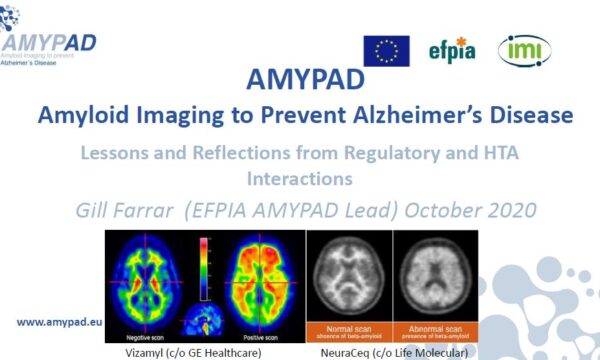
Now, working in an international research environment at Amsterdam UMC and contributing to initiatives such as AMYPAD and Euro-PAD are central to my work. Being part of this collaborative and tight-knit research community is something I truly value and is a highly rewarding part of my development as a researcher.
Could you tell us a bit more about the type of research you are working on, and how it relates to AMYPAD or Euro-PAD?
My research focuses on multimodal neuroimaging, combining complementary brain imaging modalities to develop models that are more sensitive to the earliest changes associated with Alzheimer’s disease and to gain insight into underlying disease mechanisms. Rather than studying each imaging modality in isolation, my work aims to integrate information across modalities to better capture the complexity of brain changes that occur in the preclinical stages of the disease.
A key aspect of this research is modelling the brain as a network, where different imaging modalities contribute complementary information about brain structure, function, and pathology. By combining these modalities within a network framework, I aim to derive network-based biomarkers that can characterise early disease-related changes and track patterns of progression across individuals.
This work directly leverages the large, harmonised multimodal datasets available through the AMYPAD and Euro-PAD consortia, which provide a unique opportunity to study preclinical Alzheimer’s disease processes at scale. Access to these rich datasets, together with a collaborative environment that encourages cross-institutional knowledge transfer and the open sharing of expertise among members, is essential for advancing this research and developing more sensitive and mechanistically informed biomarkers of Alzheimer’s disease.
What do you enjoy most about scientific research?
What I enjoy most about scientific research is the collaborative nature of the work, being part of a team and getting to know the people behind great science. I value the space it provides to continuously learn, develop, and challenge my own thinking while working towards shared goals.
I am also strongly motivated by the possibility that this work can ultimately make a meaningful impact on people’s lives, particularly in the context of dementia. Being part of collaborations that cross disciplines and national borders is especially exciting, as it brings together diverse perspectives and expertise to address complex problems.
In this regard, being part of AMYPAD and Euro-PAD is truly unique, as these initiatives bring together teamwork, openness, international collaboration, and scientific impact in one shared environment.